Indoor Air Quality in Topeka, KS
Whole-home filtration, MERV media filters, central dehumidifiers, UV germicidal purifiers, and humidifiers tailored to Kansas climate swings.
Key Service Takeaways • Indoor Air Quality
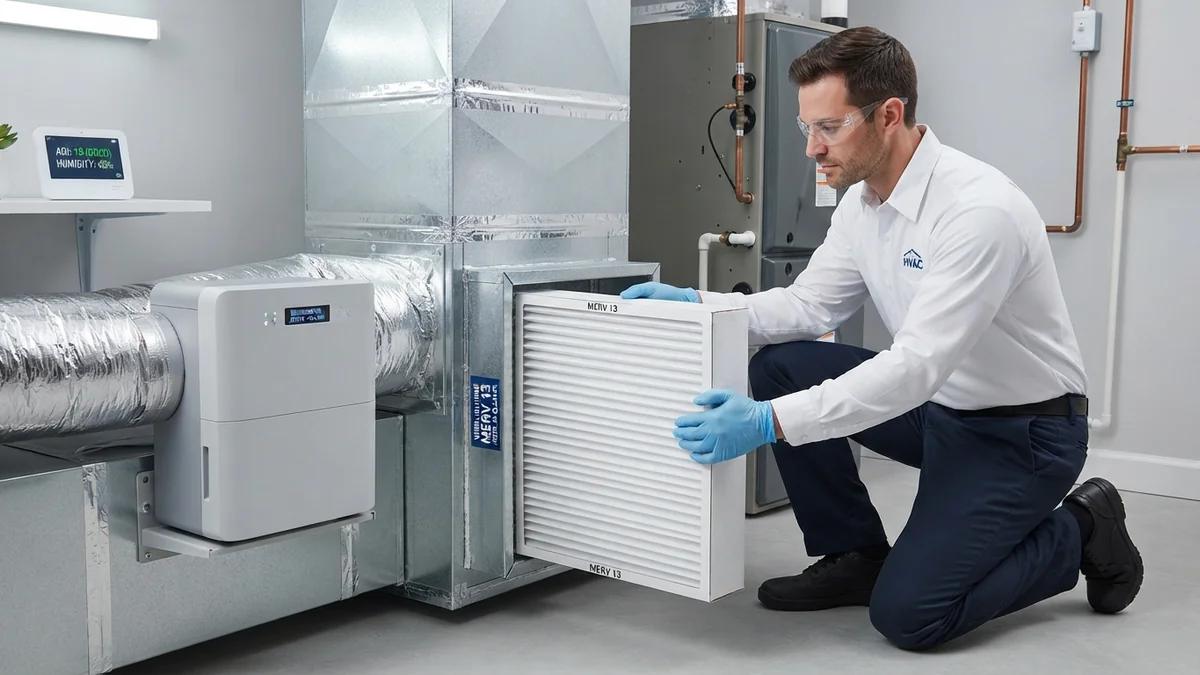
Comprehensive Indoor Air Quality Solutions in Topeka, Kansas
Most homeowners consider their heating and air conditioning equipment primarily in terms of indoor temperature control. However, temperature is only one facet of overall environmental comfort and health. The average American spends approximately 90 percent of their daily life indoors, where the concentration of airborne pollutants, allergens, volatile organic compounds (VOCs), and biological pathogens can be two to five times higher than typical outdoor air. In Topeka, Kansas, where homes are tightly sealed to resist extreme winter freezes and hot, humid summers, indoor air becomes trapped and continuously recirculated through central air handlers. As part of our comprehensive residential and commercial HVAC services, our field network delivers engineered indoor air quality (IAQ) solutions designed to protect family health, respiratory wellness, and structural integrity across Shawnee County.
Topeka resides squarely within International Energy Conservation Code (IECC) Climate Zone 4A—a mixed-humid environment characterized by severe seasonal humidity swings. During summer months, high relative outdoor humidity infiltrates living spaces, creating breeding grounds for mold, dust mites, and mildew. During winter months, fuel-fired combustion heating drops indoor relative humidity below 20 percent, triggering chronic respiratory irritation, nosebleeds, static electricity shocks, and damaged hardwood flooring. Our professional technicians design and install whole-home air quality ecosystems—including central dehumidifiers, MERV 11 to MERV 16 media filtration systems, UV-C germicidal coil purifiers, and automated steam humidifiers—engineered specifically for the climate dynamics of northeast Kansas.
Whether your property is a historic Victorian home in Potwin Place experiencing moisture retention or a modern waterfront residence in Sherwood Lake requiring active humidity extraction, our local team coordinates every stage of your indoor environmental upgrade with clear project estimates and clean-tech craftsmanship.
The Four Pillars of Whole-Home Indoor Air Quality
An effective indoor environmental strategy addresses air quality through four complementary mechanical disciplines:
[Filtration and Particulate Capture (MERV 11 - 16)]
                       │
                       ▼
[Relative Humidity Management (Dehumidifiers and Humidifiers)]
                       │
                       ▼
[Biological and Microbial Purification (UV-C Coil Lamps)]
                       │
                       ▼
[Fresh Air Ventilation and Pressure Balancing (ERVs / HRVs)]
Pillar 1: High-Efficiency Particulate Air Filtration
Standard 1-inch fiberglass furnace filters were never designed to clean the air you breathe; their sole mechanical purpose is to catch large debris like pet hair to prevent the indoor blower motor and evaporator coil from clogging. These basic filters allow over 90 percent of sub-micron particles—including pollen, mold spores, pet dander, and smoke—to pass straight through.
We install whole-home deep-pleated media air cleaners (4-inch to 5-inch filter cabinets) directly integrated into your return air plenum. These systems utilize advanced MERV (Minimum Efficiency Reporting Value) media to capture microscopic particles with minimal static air resistance:
- MERV 11 Filtration: Captures up to 85 percent of airborne particles between 1.0 and 3.0 microns, including mold spores, legionella, humidifier dust, and pet dander. Excellent for general residential comfort.
- MERV 13 Filtration: Captures up to 90 percent of particles down to 0.3 microns, including bacteria, tobacco smoke, and droplet nuclei from coughs and sneezes. Highly recommended for households with asthma or respiratory allergies.
- MERV 16 Hospital-Grade Filtration: Captures over 95 percent of sub-micron contaminants, delivering clinical-level air purity across residential living spaces without restricting air handler airflow.
Pillar 2: Central Whole-Home Dehumidification
During Topeka summers, outdoor relative humidity frequently remains above 70 percent. While central air conditioners remove some moisture during cooling cycles, they only dehumidify when actively lowering temperature. On mild 78-degree summer days with 85 percent outdoor humidity, your air conditioner may only run for ten minutes per hour. The result is a cold, clammy house with indoor relative humidity soaring above 60 percent.
Installing a dedicated central dehumidifier (extracting between 70 and 130 pints of water per day) parallel to your duct system solves this dilemma:
- The dehumidifier monitors indoor relative humidity independently of thermostat temperature setpoints.
- It draws humid air from living spaces, extracts excess moisture, and returns clean, dry air to the supply ductwork.
- Maintaining relative humidity between 40 and 50 percent allows you to set your air conditioning thermostat three to four degrees higher while feeling significantly cooler, resulting in lower electric bills from Evergy.
Pillar 3: Whole-Home Winter Humidification
In January and February, outdoor air in Shawnee County holds very little moisture. When this frigid outdoor air infiltrates your home and is heated to 70 degrees by your gas furnace, its relative humidity plummets below 20 percent—drier than the Sahara Desert. This parched air pulls moisture from human skin, mucous membranes, and wooden structural furnishings:
- It causes painful sinus irritation, dry eyes, cracked skin, and increased vulnerability to viral infections.
- It causes hardwood flooring, door frames, musical instruments, and wood moldings to shrink, cup, and crack.
- Dry air feels cooler because body moisture evaporates rapidly, tempting homeowners to push thermostat settings higher and inflate gas bills from Kansas Gas Service.
We install automated whole-home bypass, fan-powered, and steam humidifiers directly into your heating system. Controlled by digital humidistats equipped with outdoor temperature sensors, these units add measured gallons of pure water vapor into the warm supply airstream, maintaining a healthy, comfortable 35 to 45 percent indoor humidity level all winter long.
Pillar 4: UV-C Germicidal Air Purification
The indoor evaporator coil of your central air conditioner represents a dark, perpetually damp environment that serves as an ideal incubator for mold, mildew, and bacterial bio-films. Bio-film accumulation on aluminum coil fins restricts airflow, creates sour "dirty sock" odors, and continuously disperses mold spores throughout your home whenever the blower turns on.
We install medical-grade UV-C germicidal lamps positioned directly above the evaporator coil:
- Continuous 253.7-nanometer ultraviolet light penetrates the cellular DNA of microorganisms, rendering bacteria, mold spores, and viruses incapable of reproduction.
- UV-C light keeps evaporator coil fins continuously sanitized, preserving heat transfer efficiency and eliminating biological odors at the source.
Technical Comparison of IAQ Technologies
| IAQ Equipment System | Primary Target Contaminant | Operational Mechanism | Seasonal Focus in Topeka | Expected Maintenance |
|---|---|---|---|---|
| Whole-Home Dehumidifier | High indoor moisture, clammy air, mold spores | Refrigerant-based condensation extraction (70–100+ pints/day) | Late Spring through Early Autumn | Annual air filter cleaning, condensate P-trap flush |
| Whole-Home Steam Humidifier | Dry winter air, static shocks, sinus irritation | Electric electrode canister boiling water into clean steam | Late Autumn through Early Spring | Annual canister replacement at end of heating season |
| MERV 13 to 16 Media Cabinet | Pollen, pet dander, smoke, dust mite feces | Deep-pleated mechanical media with electrostatically charged fibers | Year-Round Continuous | Media filter replacement every 6 to 12 months |
| UV-C Germicidal Coil Lamp | Surface mold, bio-film, airborne viruses and bacteria | 253.7nm ultraviolet radiation breaking microbial DNA | Year-Round Continuous | Annual UV lamp bulb replacement |
| Activated Carbon Matrix | Volatile organic compounds (VOCs), cooking/pet odors | Molecular adsorption binding chemical vapors to porous carbon | Year-Round Continuous | Carbon filter insert replacement every 12 months |
Static Duct Pressure and IAQ: Engineering for Proper Airflow
A critical consideration when upgrading indoor air quality equipment is total external static pressure (TESP). High-efficiency media filters and restrictive carbon cartridges introduce mechanical resistance into the ductwork. If an inexperienced contractor installs a dense MERV 16 filter into an undersized return plenum, the blower motor will be starved of airflow, causing evaporator coils to freeze in the summer and furnace heat exchangers to overheat on high-limit switches in the winter.
Our technicians perform comprehensive static pressure testing using digital manometers before recommending any filtration upgrade:
- We measure existing return static pressure and supply static pressure to determine your system's allowable pressure drop.
- We design custom sheet metal transition plenums that increase the physical filter surface area (using 4-inch or 5-inch deep-pleated filters), which allows high-efficiency filtration with less static resistance than a cheap 1-inch filter.
- We calibrate blower motor speed taps or adjust variable-speed ECM motor profiles to guarantee optimal CFM (cubic feet per minute) delivery across all living zones.
Clean-Tech Installation Standards and Upfront Estimates
We uphold strict clean-tech protocols across every indoor air quality installation:
- Sanitized Protective Shoe Covers: Technicians slip on clean covers before entering your home.
- Protective Drop Cloths: Clean canvas runners protect floors, carpets, and furnishings beneath mechanical work zones.
- Clear Project Estimates: Prior to beginning installation, you receive an itemized written estimate detailing exact equipment specifications, labor hours, and total cost. What you approve is what you pay—with zero hidden charges.
Integrating IAQ With Your Broader Comfort Ecosystem
Indoor air quality equipment works hand-in-hand with your primary heating and cooling systems:
- Maintain clean evaporator coils and optimal refrigeration pressures through our routine HVAC maintenance and tune-up program.
- If poor indoor air quality is exacerbated by leaky, dusty return ducts pulling attic insulation into your air handler, explore our ductwork repair and cleaning services.
- Pair whole-home dehumidification with high-efficiency cooling through our air conditioning repair and AC installation programs.
- Balance winter heating efficiency and humidity retention with advanced furnace and heating repair solutions.
- When severe indoor air quality issues or system shutdowns occur, rely on our prompt emergency HVAC dispatch.
We proudly provide indoor air quality services throughout Shawnee County, including Silver Lake, Auburn, Tecumseh, and neighborhood communities such as College Hill and Westboro.
Frequently Asked Questions About Indoor Air Quality in Topeka
Why is my home so humid in the summer even with the air conditioning running?
Central air conditioners only dehumidify while actively cooling. If your air conditioner is oversized, it cools your home quickly and shuts off before it can extract adequate moisture from the air. A dedicated whole-home central dehumidifier operates independently of the thermostat, keeping indoor humidity at a comfortable 45 percent without overcooling.
Can high-efficiency MERV 13 filters damage my furnace or blower motor?
If a 1-inch MERV 13 filter is forced into a standard return slot, it can create excessive static pressure that starves the blower motor of air and causes equipment overheating. However, when installed in a properly engineered 4-inch or 5-inch deep-pleated filter cabinet, the expanded surface area provides superior filtration with very low static resistance.
How often should UV-C germicidal lamps be replaced?
Even though a UV-C lamp may continue emitting visible blue light after twelve months, its germicidal ultraviolet light output degrades over time. UV-C bulbs should be replaced once per year during routine seasonal maintenance to maintain effective microbial disinfection.
What is the ideal indoor humidity level during a Kansas winter?
During winter months in Topeka, indoor relative humidity should be maintained between 35 and 45 percent. If outdoor temperatures drop below zero, humidity should be adjusted slightly lower (to 30 percent) to prevent condensation from forming on interior window glass.
Breathe Cleaner, Healthier Air in Your Topeka Home Today
Take control of your indoor environmental health with proven whole-home filtration, dehumidification, and purification solutions. Contact our experienced dispatch team today at (785) 219-8054 or submit an online inquiry through our contact page. We provide clear project estimates, precision static pressure engineering, and clean-tech craftsmanship across Topeka, KS.
Mandatory Pricing Disclosure: Estimates are for budgeting purposes only. Actual prices vary based on on-site equipment conditions, ductwork configuration, electrical compatibility, and mechanical permit fees required by the City of Topeka.
Direct Field Dispatch
Need immediate diagnostic assessment or repair scheduling?
Complementary HVAC Services
Our 4-Step Service Methodology
Engineered to guarantee punctuality, upfront cost clarity, and City of Topeka mechanical code compliance.
Discovery and Dispatch
Direct telephone intake with our Topeka dispatch coordinator to document failure symptoms, evaluate weather safety risks, and route the nearest field unit.
Empirical Diagnostic
Comprehensive physical, thermal, and electrical diagnostic testing of coils, motors, capacitors, and gas valves to pinpoint root failures without guesswork.
Clear Upfront Estimate
We explain exact component failure findings and present an itemized written estimate detailing scope and materials for your authorization before work starts.
Precision Execution
Precision repairs using OEM-spec parts, adherence to local Kansas mechanical codes, complete clean-tech vacuum cleanup, and operational clearance sign-off.
Frequently Asked Questions
Clear, factual answers regarding diagnostic procedures, pricing transparency, permits, and equipment performance in Topeka, KS.
How quickly can an HVAC technician be dispatched to my property in Topeka?
Do you provide written estimates before beginning repair work?
What clean-tech property protections do your technicians follow?
Are permits required for HVAC replacement in Topeka, KS?
What is the difference between SEER and SEER2 ratings in Kansas?
Should I repair or replace my aging central air conditioner or furnace?
How do extreme Kansas winter seasons affect heat pump performance?
Do you service both residential and commercial HVAC systems in Shawnee County?
Topeka and Shawnee County Service Radius
Providing direct technician dispatch across regional cities, historic neighborhoods, and rural acreage communities.