Heat Pump Services in Topeka, KS
All-season dual-fuel and cold-climate heat pump installation, reversing valve troubleshooting, defrost cycle calibration, and maintenance across Shawnee County.
Key Service Takeaways • Heat Pump Services
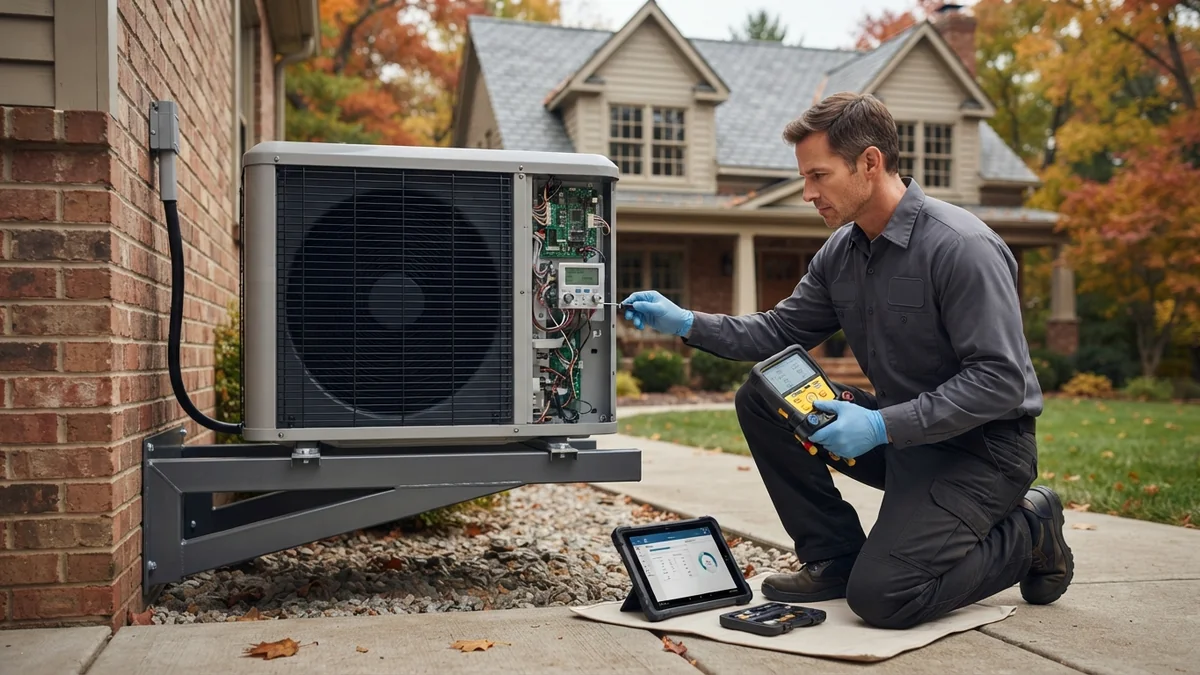
Advanced Heat Pump Installation, Repair, and Dual-Fuel Services in Topeka, KS
As residential heating and cooling technology advances, homeowners across northeast Kansas are increasingly turning to modern heat pump systems for year-round comfort and exceptional energy efficiency. In Topeka, where weather conditions range from scorching summer heat waves to frigid sub-zero winter chills, heat pump systems deliver a versatile, all-in-one climate control solution. As part of our comprehensive residential and commercial HVAC services, our field network provides specialized cold-climate heat pump installation, precision reversing valve diagnostics, defrost control calibration, and dual-fuel hybrid integration across Topeka and Shawnee County.
Unlike legacy heat pumps from decades past that struggled to produce warm air once outdoor temperatures dropped below freezing, today's inverter-driven cold-climate heat pumps maintain full heating capacity down to 5 degrees Fahrenheit and continue extracting usable heat from ambient air at minus 15 degrees. When paired with a high-efficiency gas furnace in a dual-fuel configuration, a heat pump creates the ultimate hybrid comfort ecosystem—delivering whisper-quiet, ultra-efficient heating during mild autumn and spring days while preserving gas combustion for extreme winter blizzards.
Whether you are considering converting an older gas or electric resistance system in Westboro or need immediate troubleshooting for a malfunctioning defrost cycle in Sherwood Lake, our professional technicians deliver empirical diagnostics, transparent estimates, and clean-tech property respect.
How Heat Pumps Function: The Thermodynamic Principles of All-Season Comfort
A heat pump is essentially a central air conditioner equipped with a specialized four-way reversing valve that enables the refrigeration cycle to operate in both directions:
1. The Cooling Mode (Summer Operation)
During warm Kansas summers, a heat pump functions identically to a standard central air conditioner. Liquid refrigerant expands inside the indoor evaporator coil, absorbing thermal energy and moisture from your indoor air. The vaporized refrigerant is compressed and pumped to the outdoor coil, where heat is expelled into the ambient atmosphere.
2. The Heating Mode (Winter Operation)
In winter, the four-way reversing valve shifts mechanical position, reversing the flow of refrigerant. The outdoor coil becomes the evaporator, absorbing heat energy from cold outdoor air—even air that feels bitterly cold contains substantial thermal energy. The compressor elevates this absorbed heat to high temperature and pressure, directing it to the indoor coil where the blower distributes warm air through your supply ductwork.
3. The Reversing Valve and Solenoid Coil
The reversing valve is the mechanical heart of any heat pump. Actuated by an electrical solenoid coil energized by the thermostat (typically the "O" or "B" terminal), this valve physically slides internal brass spools to switch refrigerant pathways. If the solenoid coil fails or the internal valve spool binds due to sludge or acid contamination, the heat pump becomes stuck in either heating or cooling mode.
Common Heat Pump Failure Symptoms and Diagnostic Indicators
Because heat pumps operate twelve months a year rather than taking a seasonal rest, their mechanical components experience twice the operational runtime of standard standalone cooling or heating equipment. Recognizing early failure symptoms allows property owners to schedule timely repairs before critical compressor damage occurs:
1. The Heat Pump Is Stuck in Cooling Mode During Winter (or Heating in Summer)
If your thermostat calls for heat on a cold morning but registers blow air that chills the room, the reversing valve or its control circuit has likely failed. Technicians test low-voltage electrical signals from the thermostat sub-base, verify solenoid coil magnetic actuation, and measure temperature differentials across valve ports to determine whether the fault is electrical or mechanical.
2. The Outdoor Unit Is Completely Encased in Thick Ice
During normal winter operation, moisture in the outdoor air condenses and freezes onto the outdoor coil fins. A healthy heat pump initiates an automated defrost cycle every 30 to 90 minutes to melt this frost. However, if the entire outdoor unit becomes buried under a heavy blanket of solid ice extending across the top grille and fan motor, the defrost system has failed. Operating a heat pump in this condition can bend fan blades, burn out the fan motor, and destroy the compressor.
3. Auxiliary or Emergency Heat Operates Continuously
Most heat pumps in Topeka utilize auxiliary electric resistance heat strips or a secondary gas furnace to assist during severe cold snaps. If your thermostat indicates "AUX HEAT" or "EM HEAT" continuously even in mild 45-degree weather, your heat pump compressor has shut down or lost refrigerant charge, forcing your home to rely on expensive backup heat that causes electricity bills from Evergy to skyrocket.
4. Cold Air Discharge During Defrost Cycles
During a defrost cycle, the heat pump temporarily shifts back into cooling mode to direct hot gas to the outdoor coil to melt frost. To prevent blowing cold air into your home during this 5-to-10 minute cycle, the system's control board must simultaneously energize the indoor auxiliary heat strips. If those heat strips fail to engage due to a blown thermal fuse or defective sequencer relay, your home will experience uncomfortable drafts of cold air.
5. High-Pitched Screeching or Buzzing Noises
A sharp buzzing originating from the outdoor unit often indicates that the reversing valve solenoid is chattering due to low control voltage (below 24 volts AC). Screeching noises point to outdoor fan motor bearing failure, while loud clanking signals broken internal scroll compressor components.
In-Depth Diagnostic Protocol: How Our Technicians Troubleshoot Heat Pumps
Our professional technicians execute an empirical diagnostic sequence tailored to the unique complexities of reversible refrigeration circuits:
[System Operational Intake and Thermostat Signal Verification]
                         │
                         ▼
[Reversing Valve Solenoid and Port Differential Temperature Test]
                         │
                         ▼
[Defrost Control Board and Outdoor Sensor Calibration]
                         │
                         ▼
[Refrigerant Pressure, Superheat and Subcooling in Both Modes]
                         │
                         ▼
[Auxiliary Heat Strip Amperage and Sequencer Relay Test]
                         │
                         ▼
[Static Duct Pressure and Airflow CFM Verification]
                         │
                         ▼
[Itemized Written Repair or Modernization Estimate]
Step 1: Reversing Valve and Solenoid Diagnostics
Technicians measure the 24V AC signal delivered to the reversing valve solenoid terminal. If electrical voltage is present, the technician tests for mechanical movement using an external magnet. Infrared temperature sensors measure the temperature of the three bottom ports on the valve; excessive temperature bleed-through confirms an internal mechanical leak requiring valve replacement.
Step 2: Defrost Cycle Testing and Sensor Calibration
To test the defrost mechanism, technicians bridge test pins on the electronic defrost control board to force a manual defrost cycle:
- We confirm that the reversing valve shifts into cooling mode.
- We confirm that the outdoor condenser fan motor shuts off to allow heat to build in the outdoor coil.
- We measure amp draw across the auxiliary heating elements to verify that indoor tempering heat engages.
- We test the defrost termination thermostat (bi-metal sensor) or outdoor thermistor for accurate resistance values.
Step 3: Dual-Direction Refrigerant Pressure Evaluation
Because refrigerant flows in opposite directions depending on operational mode, technicians use digital manifold gauges equipped with high-side and low-side temperature clamps to evaluate pressures and line temperatures in both heating and cooling modes. This ensures proper subcooling during summer cooling and adequate superheat during winter heating.
Dual-Fuel Hybrid Systems: The Ultimate Climate Solution for Topeka
For homeowners seeking the pinnacle of winter reliability and year-round energy savings, our team specializes in designing and installing dual-fuel hybrid heating systems.
What Is a Dual-Fuel System?
A dual-fuel system pairs an electric high-efficiency heat pump with a natural gas furnace supplied through Kansas Gas Service:
| Outdoor Temperature Range | Primary Heat Source Engaged | Operational Benefit |
|---|---|---|
| Above 35°F to 40°F (Mild Winter Days) | Electric Heat Pump | The heat pump delivers gentle, highly efficient warmth by transferring ambient heat rather than burning fuel, reducing gas consumption. |
| Below 30°F to 35°F (Freezing Cold Fronts) | Natural Gas Furnace | The system automatically shuts down the heat pump and ignites the gas furnace, delivering robust, high-temperature heat without relying on expensive electric heat strips. |
The Balance Point Setting
Our technicians calculate the exact economic and thermal "balance point" of your home—the outdoor temperature where it becomes more cost-effective to heat with natural gas than electricity. The smart thermostat automatically manages the switchover, optimizing your utility bills regardless of volatile energy prices.
Heat Pump Efficiency Metrics: Understanding SEER2 and HSPF2
When investing in a new heat pump, understanding performance metrics ensures you select equipment matched to your energy goals:
- SEER2 (Seasonal Energy Efficiency Ratio 2): Measures cooling efficiency under updated Department of Energy static duct pressure baselines. Modern heat pumps range from 15.2 to over 20.0 SEER2.
- HSPF2 (Heating Seasonal Performance Factor 2): Measures the total heating output over a typical winter divided by the total electrical energy consumed. High-efficiency cold-climate heat pumps achieve 8.5 to 10.0+ HSPF2.
- COP (Coefficient of Performance): The ratio of heat delivered to energy consumed. At 47 degrees Fahrenheit, advanced inverter heat pumps achieve a COP of 3.5 to 4.0—meaning they deliver 3.5 to 4 units of heat energy for every single unit of electricity consumed.
Review our detailed heat pump cost guide to compare investment tiers, operating expenses, and local utility rebate eligibility.
City of Topeka Permitting and Energy Efficiency Tax Credits
All heat pump installations and dual-fuel conversions within Topeka and Shawnee County require mechanical and electrical permits issued by the City of Topeka Development Services.
Consumer Protections of Permitting
Permitting ensures that city mechanical inspectors verify proper high-voltage electrical disconnect sizing, dedicated circuit breaker protection, condensate disposal, and refrigeration line clearances according to the International Mechanical Code (IMC) and National Electrical Code (NEC).
Maximizing Financial Incentives: Rebates and Tax Credits
Upgrading to a qualifying high-efficiency heat pump provides substantial financial offsets:
- Federal Section 25C Tax Credit: Homeowners can claim up to 30 percent of the project cost, capped at $2,000, for qualifying Consortium for Energy Efficiency (CEE) Tier 1 and Tier 2 heat pumps.
- Evergy Electric Rebates: Cash rebates for qualifying heat pump installations that replace inefficient electric resistance heating or aging cooling equipment.
- Our team provides all AHRI documentation required for effortless incentive processing.
Comprehensive HVAC Integration Across Topeka Communities
A heat pump operates as part of an interconnected whole-home system:
- Maintain peak reversible efficiency with semi-annual inspections through our HVAC maintenance and tune-up program.
- If your heat pump struggles during peak summer months, review our diagnostic procedures on air conditioning repair.
- Ensure your ductwork can deliver required CFM airflow without resistance; learn about our ductwork repair and sealing services.
- Maintain healthy indoor air during winter heating cycles with indoor air quality solutions.
- For emergency freeze recovery, rely on our priority emergency HVAC dispatch.
We proudly serve homeowners across all Shawnee County jurisdictions, including Silver Lake, Auburn, Tecumseh, and historic Topeka neighborhoods like Potwin Place and College Hill.
Frequently Asked Questions About Heat Pumps in Topeka
Can a heat pump really heat a home during a freezing Kansas winter?
Yes. Modern cold-climate inverter heat pumps utilize advanced variable-speed scroll compressors and enhanced vapor injection to extract heat down to negative 15 degrees Fahrenheit. In dual-fuel setups, a secondary gas furnace automatically provides backup heat during the most severe polar freezes.
Why is my outdoor heat pump smoking or steaming in the winter?
What appears to be smoke is actually harmless water vapor. When your heat pump enters a defrost cycle, the outdoor coil heats up rapidly to melt accumulated frost. The melting ice evaporates into steam for several minutes before the unit returns to normal heating mode.
What is the difference between Emergency Heat and Auxiliary Heat?
Auxiliary heat is automated backup heat (electric heat strips or gas furnace) that turns on automatically when the heat pump needs assistance on very cold days. Emergency heat is a manual setting selected on your thermostat that shuts off the heat pump entirely and runs only the backup heat source—typically used only if the outdoor heat pump has mechanically failed.
How much can I save by switching to a dual-fuel heat pump?
Depending on current utility rates from Evergy and Kansas Gas Service, homeowners switching from electric resistance heating or aging 80 percent furnaces to a dual-fuel heat pump can save 20 to 35 percent on overall annual heating and cooling expenses.
Schedule Professional Heat Pump Service in Topeka Today
Ready to optimize your year-round comfort with modern, high-efficiency heat pump technology? Contact our professional dispatch desk today at (785) 219-8054 or submit an online service request through our contact page. We provide clear project estimates, precision sizing, and clean-tech craftsmanship across Topeka, KS.
Mandatory Pricing Disclosure: Estimates are for budgeting purposes only. Actual prices vary based on on-site equipment conditions, ductwork configuration, electrical compatibility, and mechanical permit fees required by the City of Topeka.
Direct Field Dispatch
Need immediate diagnostic assessment or repair scheduling?
Complementary HVAC Services
Our 4-Step Service Methodology
Engineered to guarantee punctuality, upfront cost clarity, and City of Topeka mechanical code compliance.
Discovery and Dispatch
Direct telephone intake with our Topeka dispatch coordinator to document failure symptoms, evaluate weather safety risks, and route the nearest field unit.
Empirical Diagnostic
Comprehensive physical, thermal, and electrical diagnostic testing of coils, motors, capacitors, and gas valves to pinpoint root failures without guesswork.
Clear Upfront Estimate
We explain exact component failure findings and present an itemized written estimate detailing scope and materials for your authorization before work starts.
Precision Execution
Precision repairs using OEM-spec parts, adherence to local Kansas mechanical codes, complete clean-tech vacuum cleanup, and operational clearance sign-off.
Frequently Asked Questions
Clear, factual answers regarding diagnostic procedures, pricing transparency, permits, and equipment performance in Topeka, KS.
How quickly can an HVAC technician be dispatched to my property in Topeka?
Do you provide written estimates before beginning repair work?
What clean-tech property protections do your technicians follow?
Are permits required for HVAC replacement in Topeka, KS?
What is the difference between SEER and SEER2 ratings in Kansas?
Should I repair or replace my aging central air conditioner or furnace?
How do extreme Kansas winter seasons affect heat pump performance?
Do you service both residential and commercial HVAC systems in Shawnee County?
Topeka and Shawnee County Service Radius
Providing direct technician dispatch across regional cities, historic neighborhoods, and rural acreage communities.